
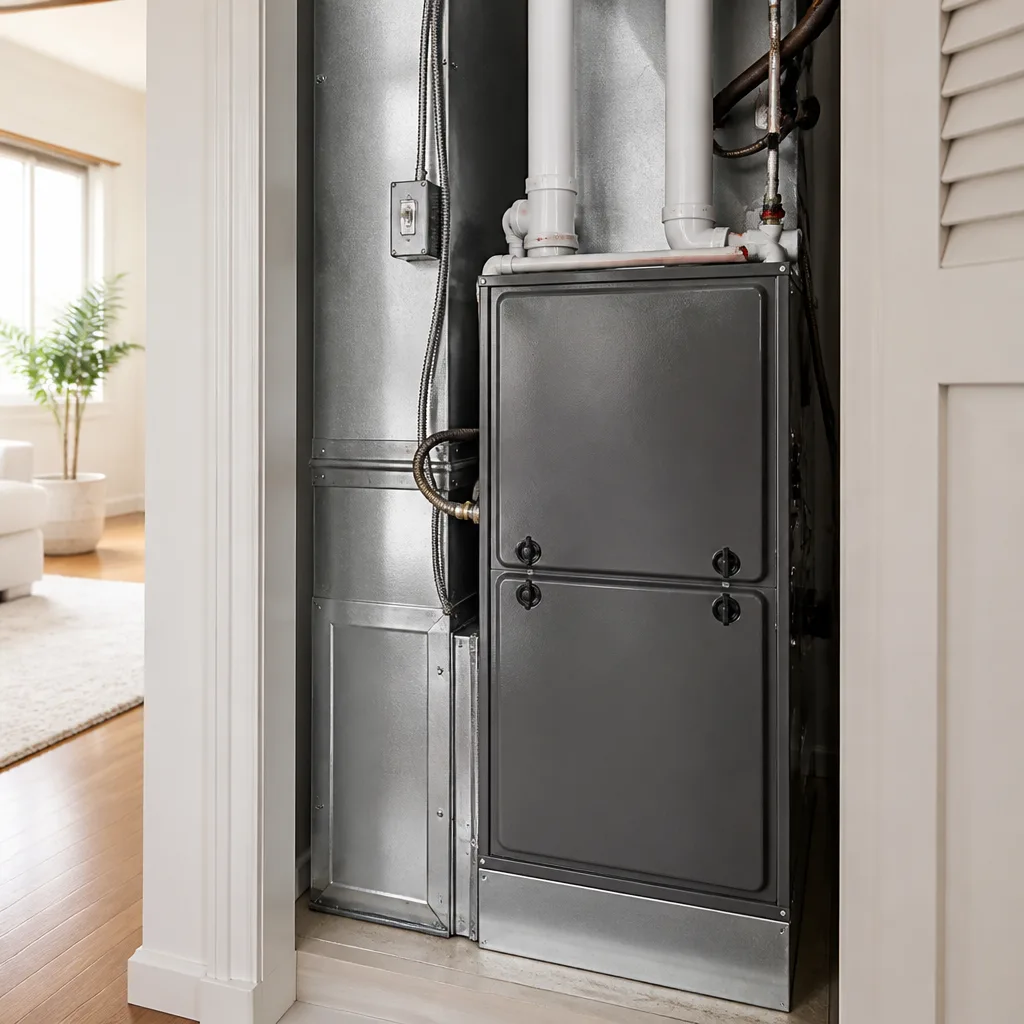
 Furnace & heating
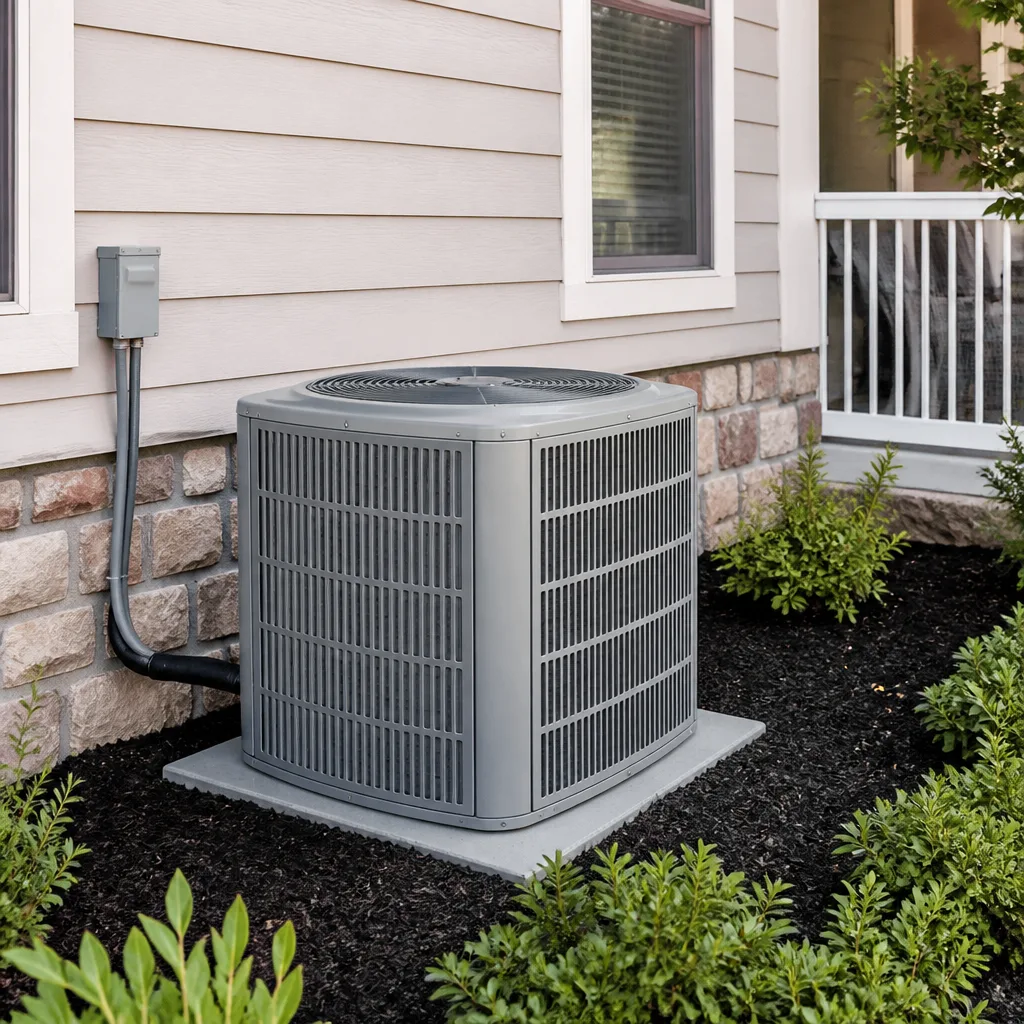 AC repair
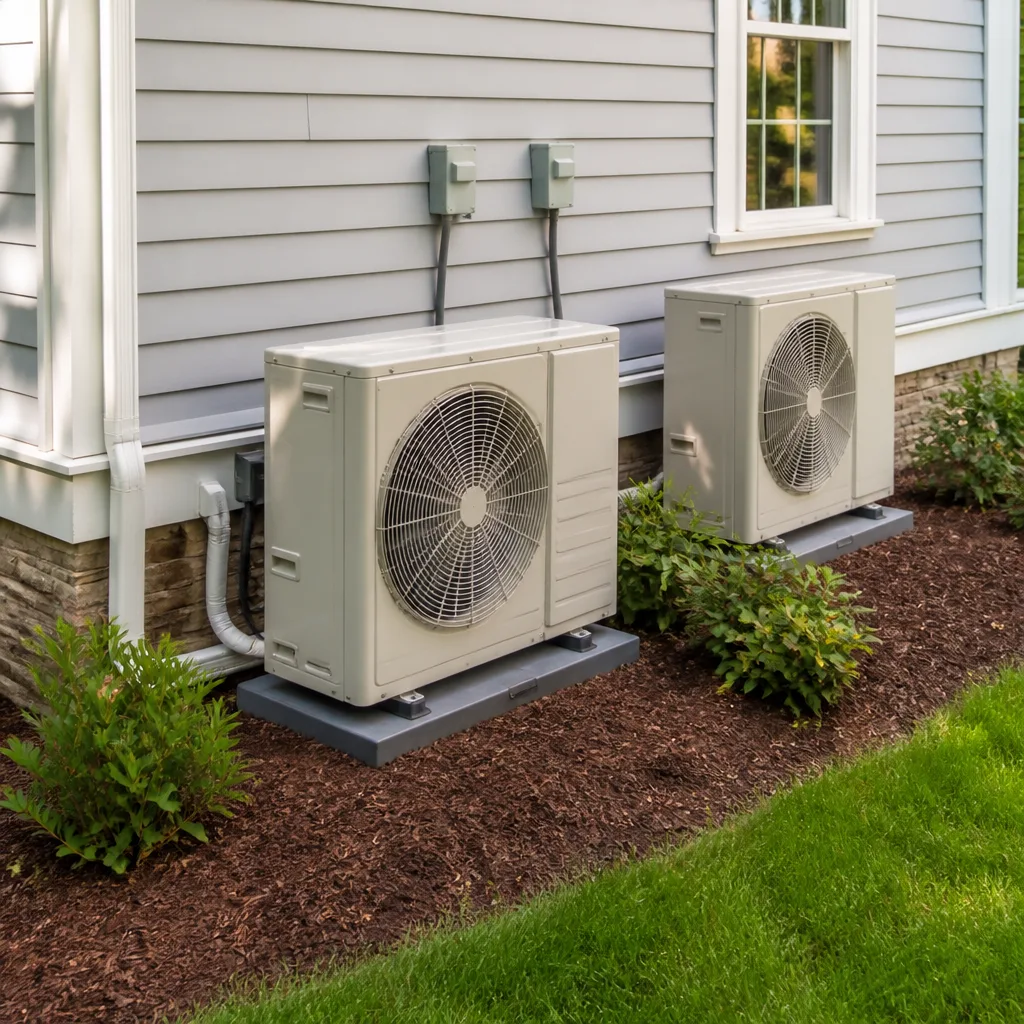 Heat pumps
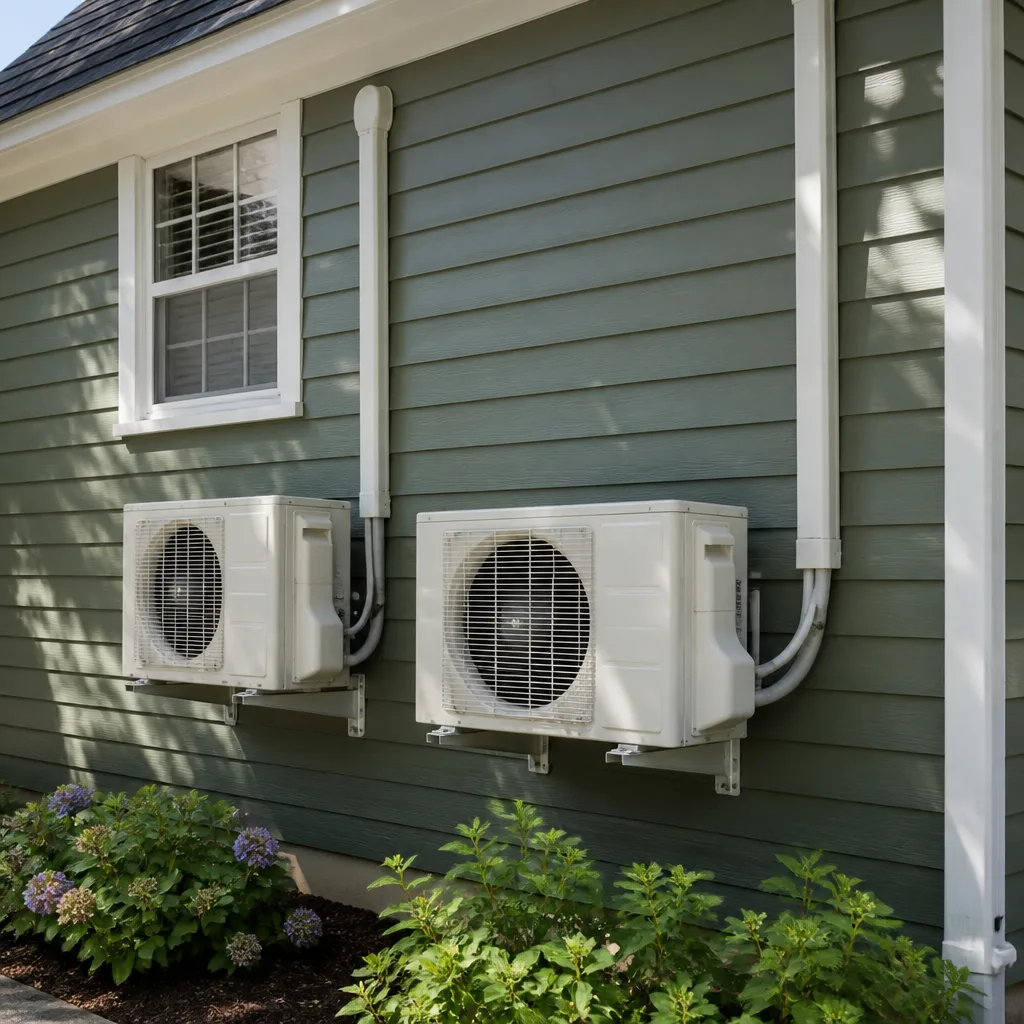 Ductless mini splits
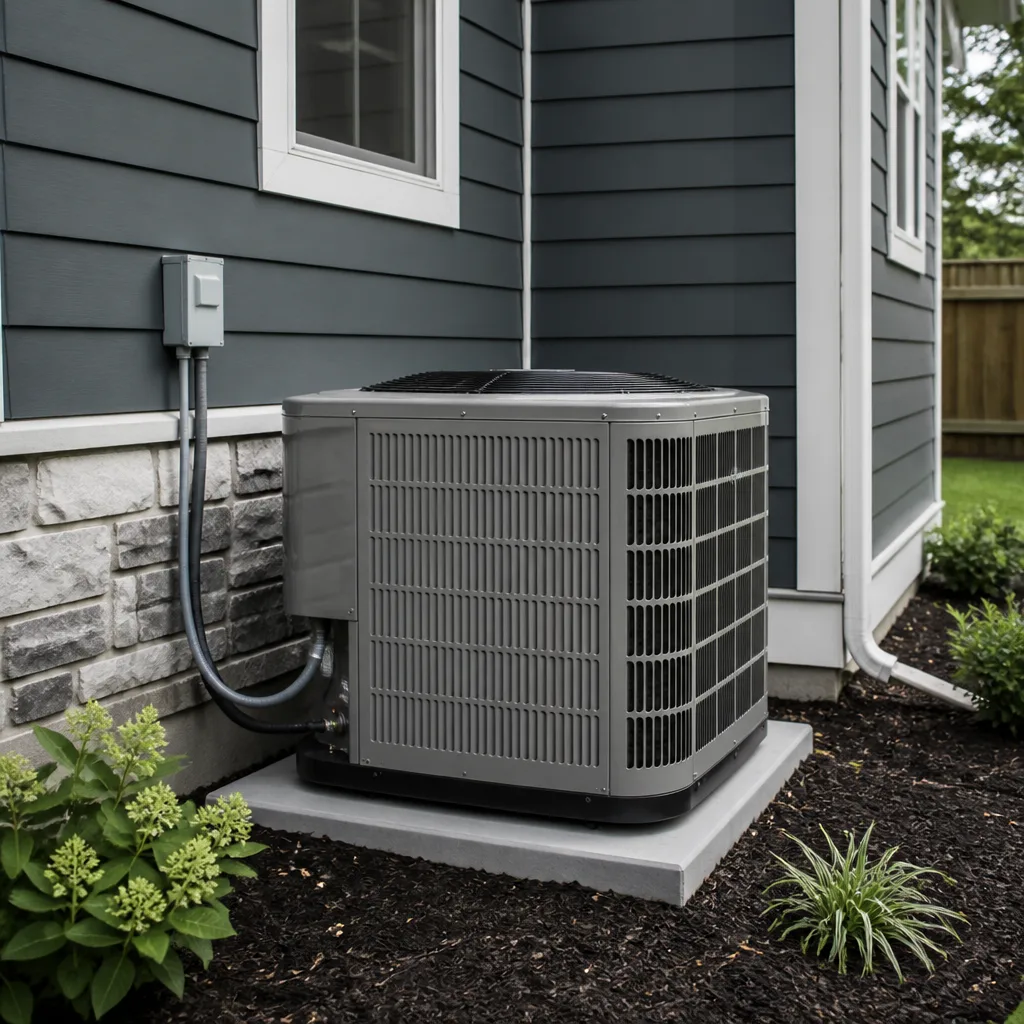 Carrier
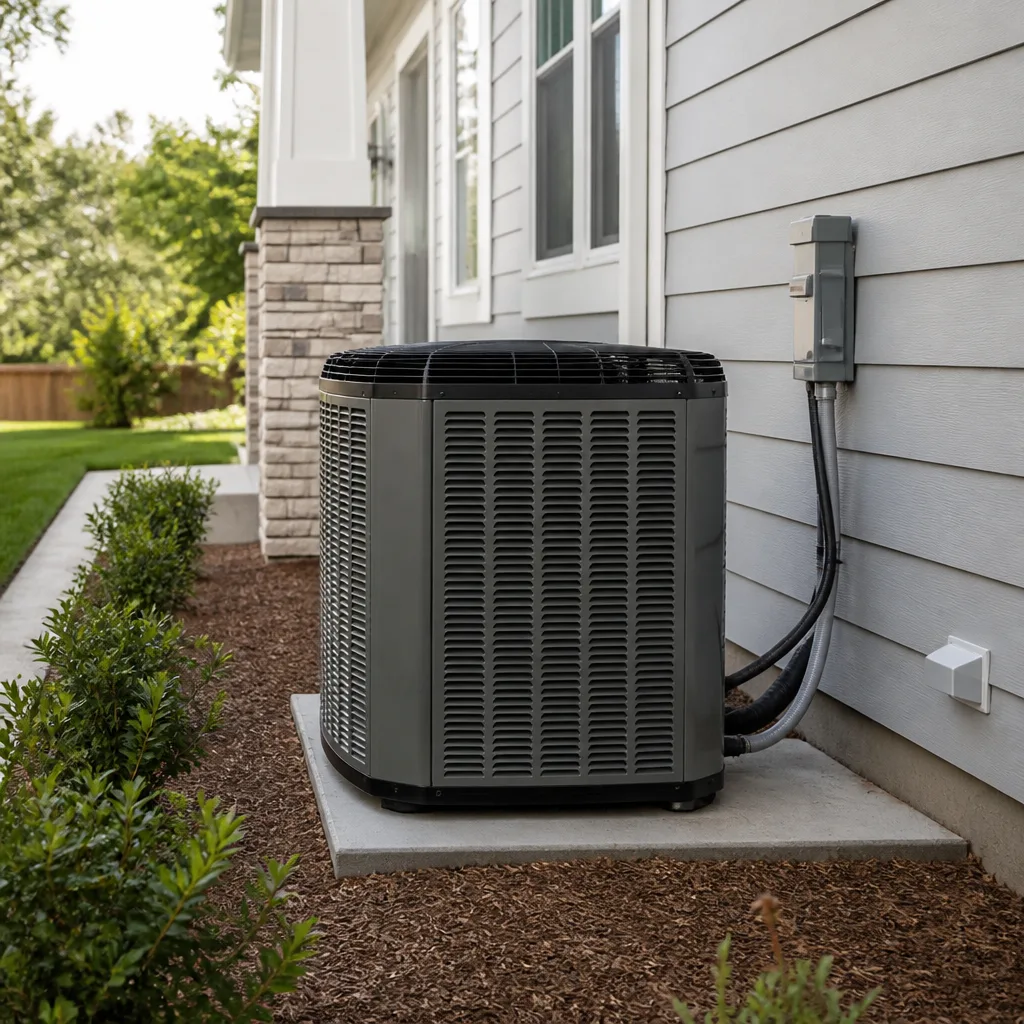 Trane
TraneSeasonal tune-up and full diagnostic on your Carrier, Trane, or Goodman system - readings shown to you before any repair is proposed
Diagnosis first, numbers second - you approve the repair price before a single part goes in.
Get your free estimateBryant Heat Pump Service: The Dallas Owner’s Guide
Bryant heat pump service in Dallas typically runs $150 – $650 for a repair, with most common part replacements landing between $200 and $450, parts and labor included. We stock the Bryant-specific components that fail most often on our trucks, so in many cases we can have your system running the same day you call. If your Bryant heat pump is blowing warm air, short-cycling, or making a sound it never made before, a single failed part is usually the culprit – a capacitor, a contactor, a defrost control board, or a reversing valve – and we can match the exact replacement to your model’s spec sheet before we ever put a wrench to it.
The typical discovery goes like this: you walk past the thermostat, notice the house is warmer than it should be, and find the outdoor unit humming or dead quiet. Sometimes the unit trips a breaker. Sometimes it runs but the air at the vents is lukewarm at best. If you’re in Richardson, Garland, or Mesquite and your Bryant is out of warranty, this page is the fastest way to understand what failed, what it costs, and what happens when our tech arrives.
Cold Harbour Heating and Air Dallas is an independent service provider and is not affiliated with Bryant or Carrier Global Corporation. We’re factory-trained on Bryant equipment and we keep OEM and quality aftermarket parts in rotation.
Key Takeaways
- Typical Bryant heat pump repair in Dallas: $150 – $650, with most jobs in the $200 – $450 range
- Common failures: capacitors, contactors, reversing valves, defrost boards, thermistors
- We carry truck stock for the most common Bryant parts, so same-day repair is often possible
- Every repair carries our 365-Day Done Right Promise in writing
- You get a written price before any work starts – no surprises at the door
Which Bryant Models This Applies To
Bryant has sold heat pumps in the Dallas market under several series names over the years: the Evolution series (premium, communicating models with variable-speed compressors), the Preferred series (mid-tier, often two-stage), and the Legacy series (entry-level single-stage units, extremely common in North Texas tract housing of the 1990s and 2000s). The parts compatibility depends less on the name on the outdoor cabinet and more on the model number inside it. If you open the panel and see something like 263B, 286B, 286C, 289B, or 189BN, you’re looking at a specific family of Bryant equipment with its own parts matrix.
The single most important compatibility gotcha is the reversing valve. Bryant heat pumps – like most Carrier-family equipment – use a reversing valve that defaults to cooling mode when de-energized. That means the valve itself is wired “normally closed” for cooling, and the thermostat energizes it for heat. If you buy a generic aftermarket reversing valve that’s oriented the wrong way, the system will heat when it should cool and vice versa. A tech who doesn’t know the difference will chase the problem for hours. We always check the valve’s default mode against the OEM spec before installation.
For sensors and thermistors, Bryant generally uses 10k ohm thermistors on most Legacy and Preferred models, but some Evolution systems with the newer inverter-driven compressors use a different resistance curve entirely. Installing a 10k sensor on an inverter unit will produce wildly wrong temperature readings and force the system into protection mode. We have seen handymen create this exact problem on systems in Plano and Carrollton by using a universal sensor kit. The part number matters. Bryant’s parts inter-changeability with Carrier and Payne equipment is real but not universal – some boards cross over, others don’t. We verify against the factory cross-reference before the part goes on the truck.
So the short version is this: the model number on the data plate matters more than the brand logo, and the smartest first step is a phone call so we can pull the right parts reference before we ever arrive. That’s the difference between a one-trip repair and “we’ll have to order it.”
Styles & brands we work with
Signs Your Bryant Heat Pump Service Is Failing
- System blows warm air in cooling mode (or cool air in heat mode): This is the classic symptom of a stuck reversing valve or a failed capacitor that’s not letting the compressor start. In Dallas, where August heat doesn’t negotiate, a heat pump blowing warm air means the outdoor unit’s compressor isn’t doing its share of the work.
- Outdoor unit hums but never fully starts: The compressor tries to kick on, then shuts down on overload. Almost always a dead or weak start capacitor, sometimes a failing contactor. The start capacitor is the single most common Bryant heat pump part we replace in Dallas, because capacitors age faster in prolonged heat.
- Unit short-cycles: runs a few minutes, stops, runs again: Often a defrost control board issue or a refrigerant-pressure safety tripping. If the board thinks the coil is frosted when it isn’t, it’ll cycle the system in and out of defrost and the unit never settles into a steady run.
- Tripped breaker, or the unit draws too much power: A failing compressor or a grounded wire at the contactor can pull higher amperage. If the breaker trips twice in a week, don’t reset it a third time – that’s a call for a tech to trace the load before a wire overheats.
- Noise that wasn’t there before – buzzing, chattering, or screeching: A contactor that’s pitted and chattering, a fan motor bearing starting to seize, or a compressor under strain. Noise is almost always mechanical evidence of a part that’s already on its way out, not something that’ll fix itself.
See the difference
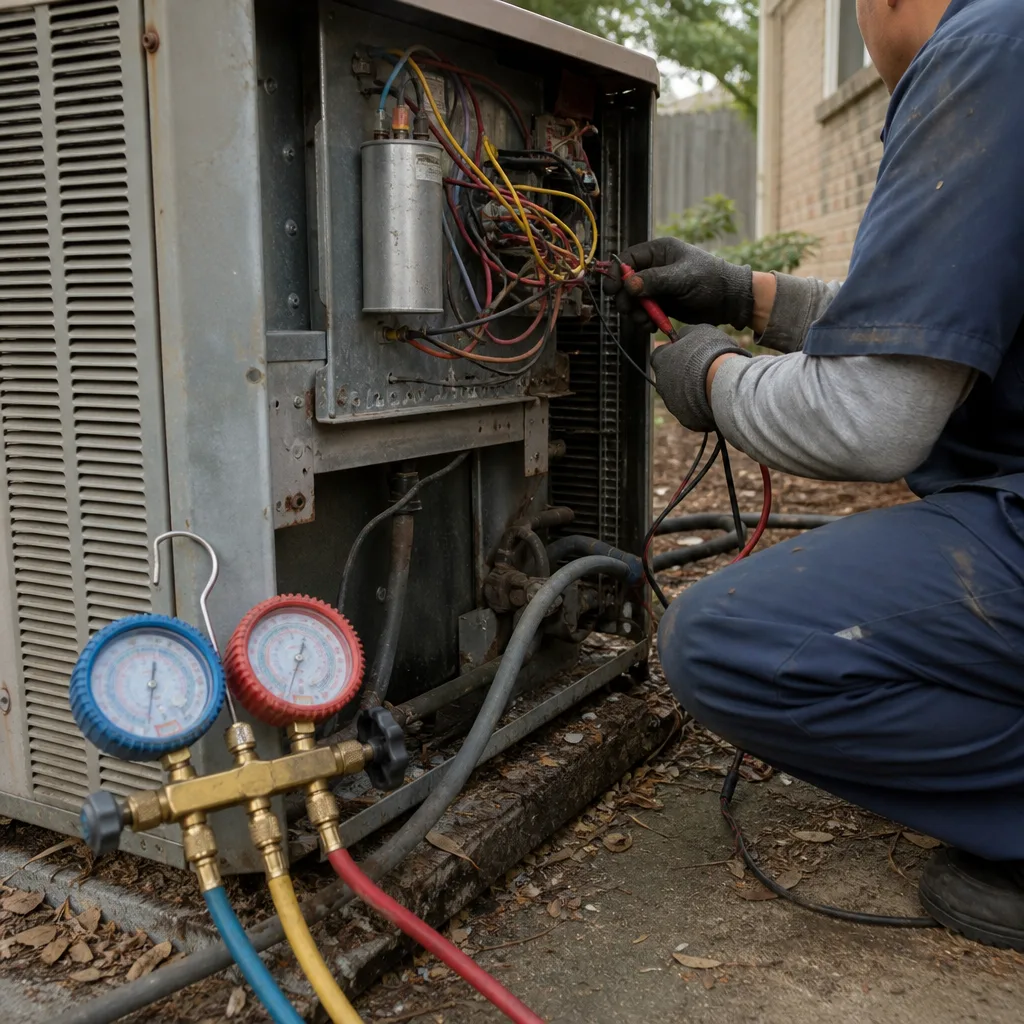 Before
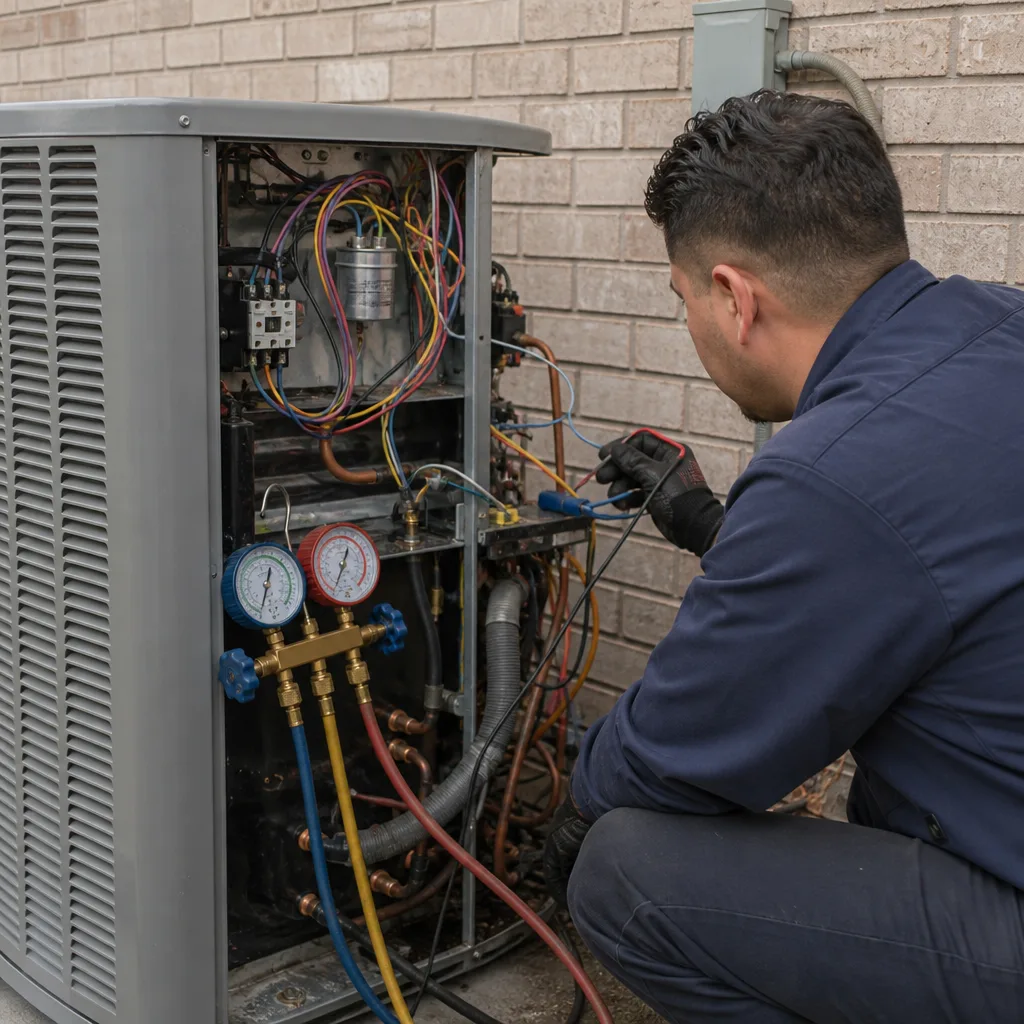 After
After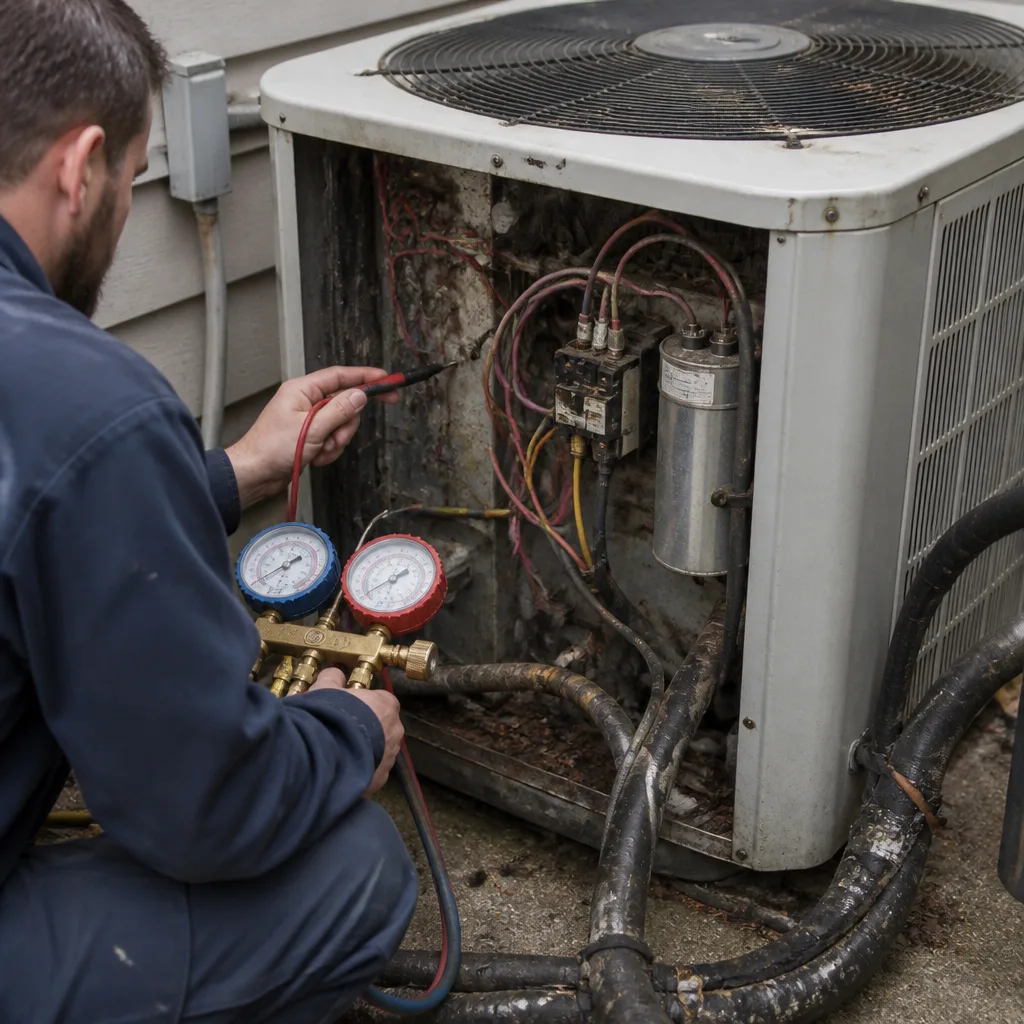 Before
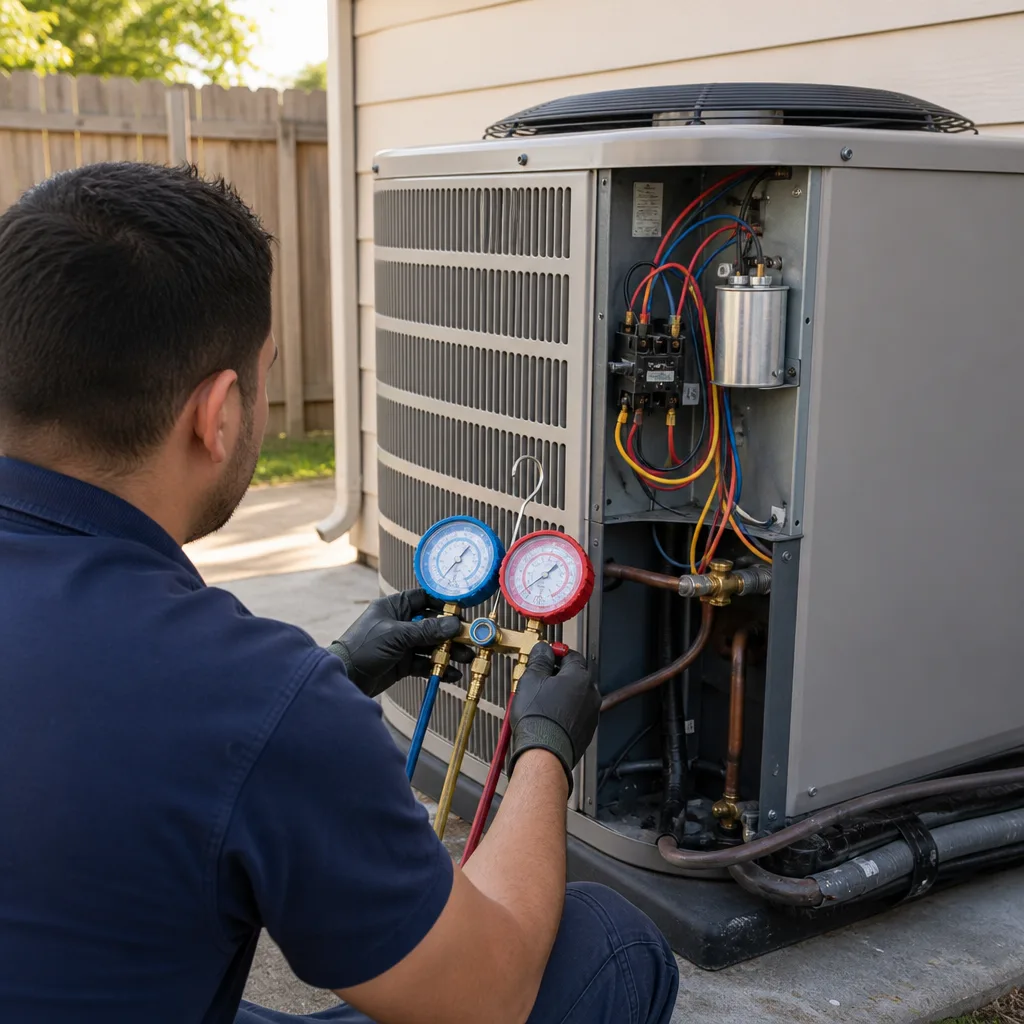 After
After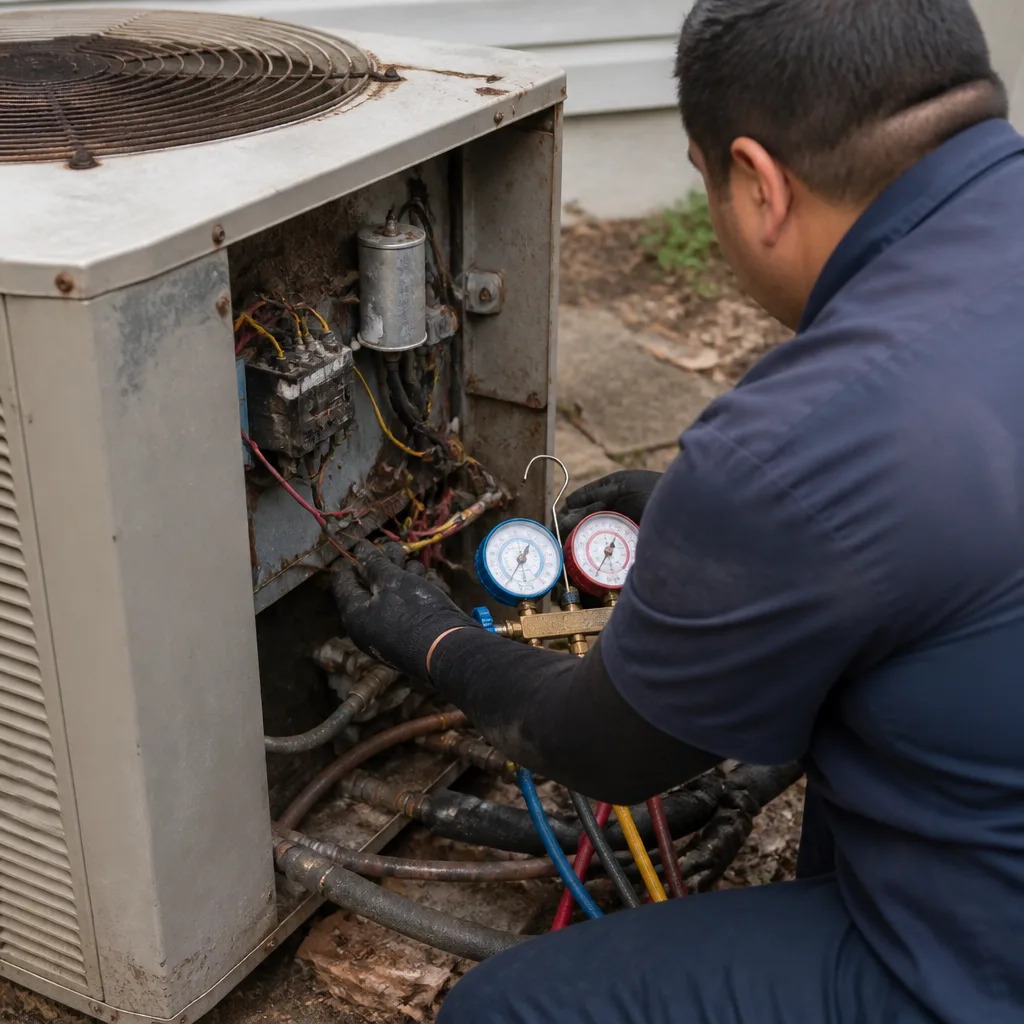 Before
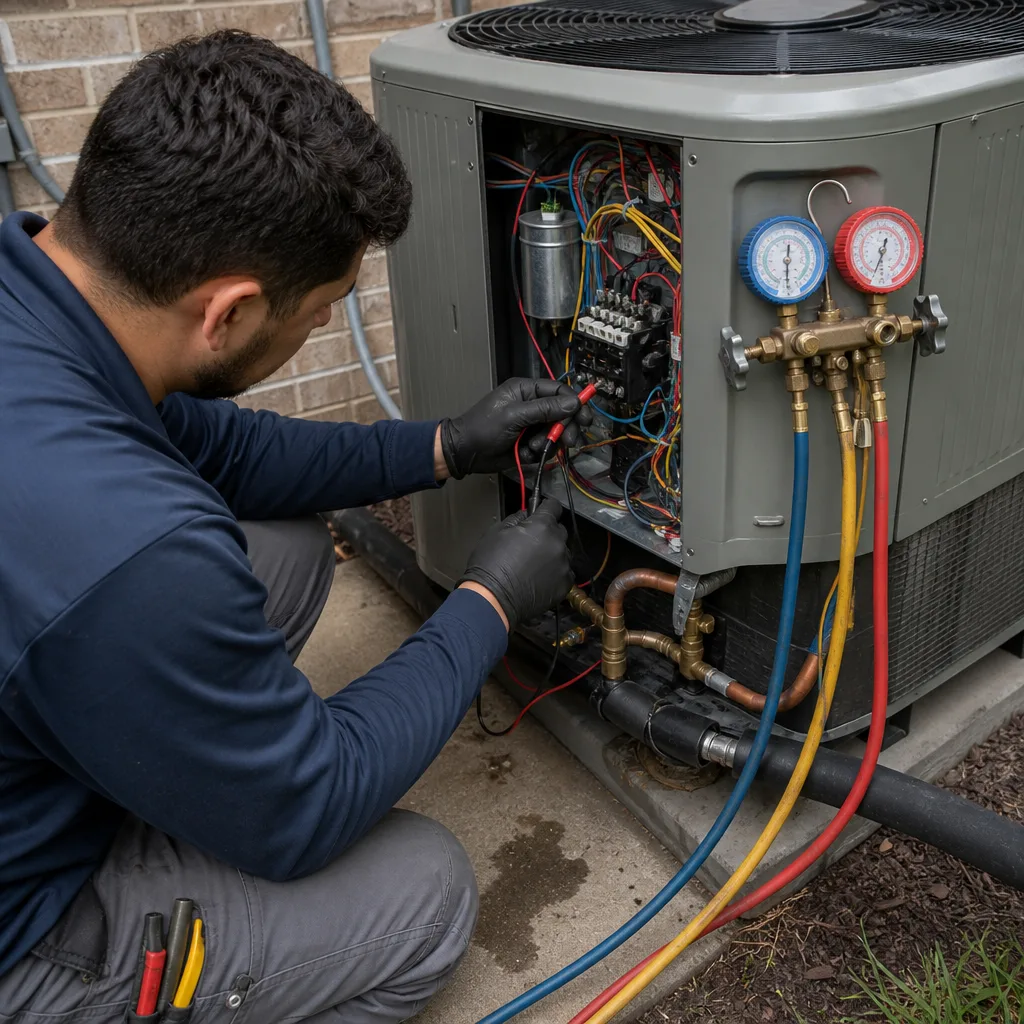 After
AfterReplacement Cost & What’s Included
For a Bryant heat pump repair in Dallas, here’s what you can expect as of 2026:
- Capacitor (start or run): $150 – $300 installed
- Contactor: $170 – $320 installed
- Defrost control board: $250 – $450 installed
- Thermistor or temperature sensor: $160 – $300 installed
- Reversing valve replacement: $500 – $650 installed (this is a bigger job – the refrigerant has to be recovered, the valve brazed out and replaced, and the system recharged)
- Compressor replacement: $600 – $1,800 installed (price depends heavily on the model and whether you have a scroll or rotary compressor)
Every one of those numbers is the written, installed price – parts and labor. No hidden trip charge, no “we found something else” unless we show you the something else and put a new number in writing before touching it. That’s the Kingswell Way: the price is handed to you on paper before a tool comes out. Victor Mancini has built this Dallas shop on the principle that you should never hear a bigger number after the work than you heard before it. Our 365-Day Done Right Promise is written into every repair: if the part fails within a year, we return and correct it at no charge. Not a pro-rated credit. A free visit that makes the problem right.
DIY or Call Us?
Let’s be honest about safety: a heat pump’s electrical panel carries 240 volts, and the capacitor inside it stores a charge even after the power is off. That capacitor can hurt you. The compressor is a sealed vessel that operates under high pressure, and the refrigerant in it is not something to vent into a Dallas backyard. If your instincts say “pop the panel off and take a look,” the most useful thing you can safely do is verify the breaker is on, check that the thermostat has fresh batteries and is set correctly, and make sure the outdoor unit isn’t buried in leaves or blocked by a fence or bush. Those three checks are genuinely safe and genuinely useful.
Beyond that, the parts that fail most often on Bryant heat pumps require a meter, the right replacement part, and the knowledge of how the system is supposed to behave when it’s healthy. We have watched Dallas homeowners turn a $200 capacitor job into a $1,400 compressor replacement by buying a capacitor with the wrong microfarad rating online and firing the system up. And that’s before we get to the question of whether the part is actually the failed part – because in a heat pump, a bad thermistor and a bad defrost board produce nearly identical symptoms. The boards are different parts, different prices, different jobs. The wrong guess doubles the cost of the right one.
If you want our eyes on it, we’re at (430) 213-5796. Tell whoever answers the phone what your Bryant is doing, and we’ll tell you what we think before we ever schedule the visit. The written price comes before the work, every single time.
FAQs
A Bryant heat pump in Dallas can last 12 – 15 years, but the parts that fail first – capacitors and contactors – typically need replacement every 5 – 7 years because of how hard they work in our summer heat. When a Dallas unit runs 1,800 – 2,200 hours a year, a capacitor that would last ten years in a milder climate gets worked to failure in half that time.
Parts like contactors and capacitors are always replaced, never repaired – they cost less than the labor to rebuild them. A reversing valve can sometimes be freed up if it’s stuck in one position and the system is otherwise healthy, but most Dallas techs replace it if it sticks twice. For a defrost board, replacement is usually the only option.
Most capacitor and contactor replacements take 45 – 90 minutes on site. A defrost board or thermistor swap runs about an hour. A reversing valve or compressor replacement is a half-day job, because the refrigerant has to be recovered and recharged. In most cases we can give you a firm arrival window and stick to it.
We stock the most common Bryant heat pump parts on our trucks – capacitors, contactors, defrost boards, thermistors – and we carry OEM and quality aftermarket equivalents for Carrier, Trane, and Lennox systems as well. For less common parts or specific Evolution-series boards, we usually source them same-day from local Dallas supply houses with which we hold accounts.
If your Bryant heat pump is acting up and you want a straight answer, call us at (430) 213-5796. We’ll tell you what we think, what it’ll cost, and when we can be there. That’s how it should work, and that’s how we run it.
Written by Victor Mancini, Owner, Cold Harbour Heating and Air Dallas at Cold Harbour Heating and Air Dallas, serving Dallas and nearby areas.